Understanding the Disappearing Thirst: A Common Mystery After 60
It happened to me one sunny afternoon, as I was tending to my roses—something felt off. I couldn’t quite place it. It wasn’t hunger or fatigue. It was a vague lightheadedness and a dryness in the mouth I hadn’t noticed until I paused. And then it hit me: I hadn’t had a sip of water all day. Strangely enough, I didn’t feel thirsty at all.
This seemingly small detail—feeling less thirsty—may sound insignificant, but it holds more weight than most of us realise, especially in our later years. Many seniors experience this odd reduction in thirst. But why does it happen? And more importantly, what does it mean for your health and hydration?
Why Am I Not Thirsty Anymore? The Science of Aging and Hydration
As we age, our bodies undergo a subtle but significant shift in how they manage fluids. The sensation of thirst, which acts as our physiological trigger to drink water, becomes less accurate over time. In other words, the body’s « internal alarm » doesn’t ring as loudly—or sometimes, not at all.
This is not a flaw, but a natural adaptation. Studies have shown that the hypothalamus—our brain’s thirst centre—becomes less responsive with age. This means we may no longer receive clear signals when our bodies need hydration. Instead, dehydration creeps in quietly, without the usual warning signs.
In my own circle of friends, we’ve joked that we used to follow tea breaks like clockwork, but now we only remember a drink when it’s served with biscuits—or after a little trip to the doctor’s office reveals something is amiss. The point is: relying on thirst to guide our fluid intake simply doesn’t work as well after 60.
Subtle Signs You’re Probably Not Drinking Enough Water
What surprises many is that dehydration doesn’t always feel like heavy thirst. Instead, it disguises itself through lesser-known symptoms, such as:
- Frequent headaches or dizziness
- Constipation
- Fatigue or feeling more sluggish than usual
- Dry skin or chapped lips
- Confusion or forgetfulness
- Dark-coloured urine or less frequent urination
One dear friend once mistook her forgetfulness for early signs of dementia. After some gentle nudging from her GP, it turned out she was simply dehydrated. A few weeks of mindful water intake brought remarkable clarity back to her thoughts. This isn’t magic—it’s biology. Our bodies thrive on water, and a lack of it impacts all systems, particularly in older adults.
Why Proper Hydration Is Critical in Later Life
Staying hydrated isn’t just about quenching thirst—it’s about supporting our heart, kidneys, brain, joints, and even our mood. For seniors, the stakes are even higher. Mild dehydration can lead to urinary tract infections, balance issues (leading to falls), low blood pressure, and increased risk of hospitalisation.
Water helps regulate temperature, supports digestion, lubricates joints, and eliminates toxins. It’s a quiet contributor to nearly every function your body performs, and yet, many of us struggle to get enough of it daily.
Your tea or coffee is a lovely companion, yes—but it doesn’t count for everything. In fact, caffeine can subtly increase fluid loss. This doesn’t mean we must abandon our warm mugs, but it’s helpful to balance them with clear fluids throughout the day.
How Much Water Do Seniors Really Need?
While there’s no one-size-fits-all number, a helpful general guide for older adults is around 1.5 to 2 litres (6 to 8 cups) of fluids per day. This includes not only water, but also broths, herbal teas, and water-rich foods like fruits and vegetables.
Keep in mind, individual needs vary depending on medications, medical conditions, activity level, and climate. Some medications, such as diuretics or certain blood pressure pills, increase fluid loss and may require you to replenish more often.
Gentle Strategies to Keep Hydrated—Even When You’re Not Thirsty
If waiting to feel thirsty isn’t effective, let’s shift towards intentional hydration. Here are some senior-friendly tips I’ve picked up over the years (and practise myself):
- Set a “sip schedule”: Have a small glass of water at set times—when you wake up, with meals, during medication, and before bed.
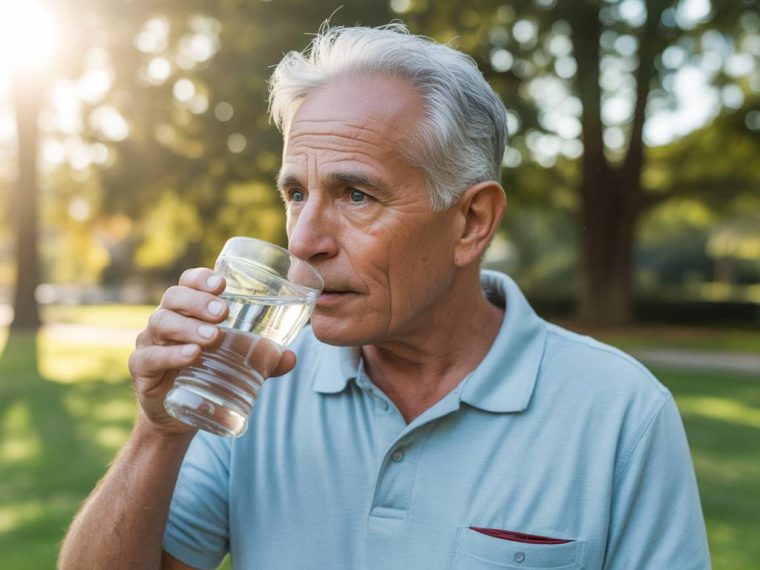
- Use visual reminders: Keep a water bottle in plain sight. I keep one nestled beside my favourite armchair—next to the remote and my reading glasses, of course.
- Flavour your water: A slice of lemon, cucumber, or mint can transform plain water into a refreshing treat. Even a dash of juice can make it more appealing.
- Choose hydrating snacks: Watermelon, oranges, cucumbers, soups, and yoghurt all contain high water content.
- Drink even when you’re indoors or not active: It’s easy to assume we only need water after sweating, but our bodies lose fluids continuously—through breathing and even sitting still.
Remember, sipping regularly throughout the day is more effective (and kinder on the bladder) than gulping down large amounts at once.
What to Watch For: When Dehydration Becomes a Risk
There are times when we need to be extra cautious about fluid intake. If you or someone you love has been experiencing vomiting, diarrhoea, or is recovering from illness or surgery, the risk of dehydration increases significantly. Warm weather also heightens the risk—even if you’re staying cool indoors.
If you’re unsure whether you’re well hydrated, one simple check is the colour of your urine. Pale yellow? You’re likely on track. Dark amber? It’s time to reach for some water.
Always speak to a healthcare provider if you have underlying conditions that require fluid restrictions (like serious heart or kidney issues), as advice can change from person to person.
Creating a Hydration Ritual That Works for You
There’s beauty in small rituals. I’ve come to enjoy my afternoon “water tea”—a tall glass served with a twist of lemon and a square of dark chocolate on the side. It’s not just hydration—it’s a pause in the day, a little indulgence, a reminder to care for the body that has served me well through the years.
Hydration can be folded gently into our routines, becoming part of the rhythm of everyday life. You don’t need to drink gallons. Just enough, consistently, with awareness and care.
Final Reflections on Listening to Your Body
Not feeling thirsty doesn’t mean your body isn’t in need. With age comes the quieting of certain signals—but our needs remain. If anything, they deepen. The goal isn’t to chase youth, but to honour the body we inhabit today. Hydration is one of the simplest ways we can do that.
So, consider this a soft invitation—from one soul to another—to pause, pour yourself a cool glass, and savour the life-affirming act of nourishment. After all, caring for ourselves in our later chapters is not only wise—it’s a quiet rebellion against neglect, and a celebration of presence.
Until next time, stay well… and don’t forget to sip now and then.